pressure-washing
How Much Does Pressure Washing Cost in Montana? (2026 Price Guide)
Montana pressure washing quotes start with a trip charge. See 2026 ranges for in-town homes, log homes, ranches, and lake cabins, plus what drives the price.
In This Article
How Much Does Pressure Washing Cost in Montana? (2026 Price Guide)
Most Montana pressure washing companies work out of six towns: Billings, Missoula, Bozeman, Great Falls, Kalispell, and Helena. If your house sits inside one of those city limits, you get a normal quote. If your place is a ranch outside Roundup or a lake house 40 miles up the shore from Polson, the first line on the estimate is a trip charge or a mileage rate, and it shows up before anyone unrolls a hose.
That travel line is the single biggest reason two Montana homeowners with the same size house can get quotes $200 apart. A Billings company charging $350 for a house wash in the Heights may charge $500 for the same job in Columbus, because the crew burns two hours and 90 miles of diesel getting there and back. Trip fees typically land between $50 and $150 flat, or roughly $1.50 to $3 per mile once you pass a 20 or 30 mile radius from the shop.
Some outfits skip the trip fee and quote rural work by the hour instead, usually $100 to $200 per hour with the clock starting when the truck leaves the yard. Either way, the farther you are from a shop, the more it pays to bundle every surface into one visit.
In-Town Homes in Billings, Missoula, Great Falls, and Helena
A standard house wash on a single-story ranch-style home in Billings or Great Falls typically lands between $200 and $350. Two-story homes with vinyl or fiber cement siding push toward $400 to $500, and the price climbs from there if the crew has to soft wash a north-facing wall that has grown green algae in the shade.
Driveways are the second most common in-town job. A two-car concrete driveway typically runs $150 to $300 depending on length, with an extra $50 to $100 if it needs a degreaser for oil stains or a rust treatment from a leaky sprinkler head.
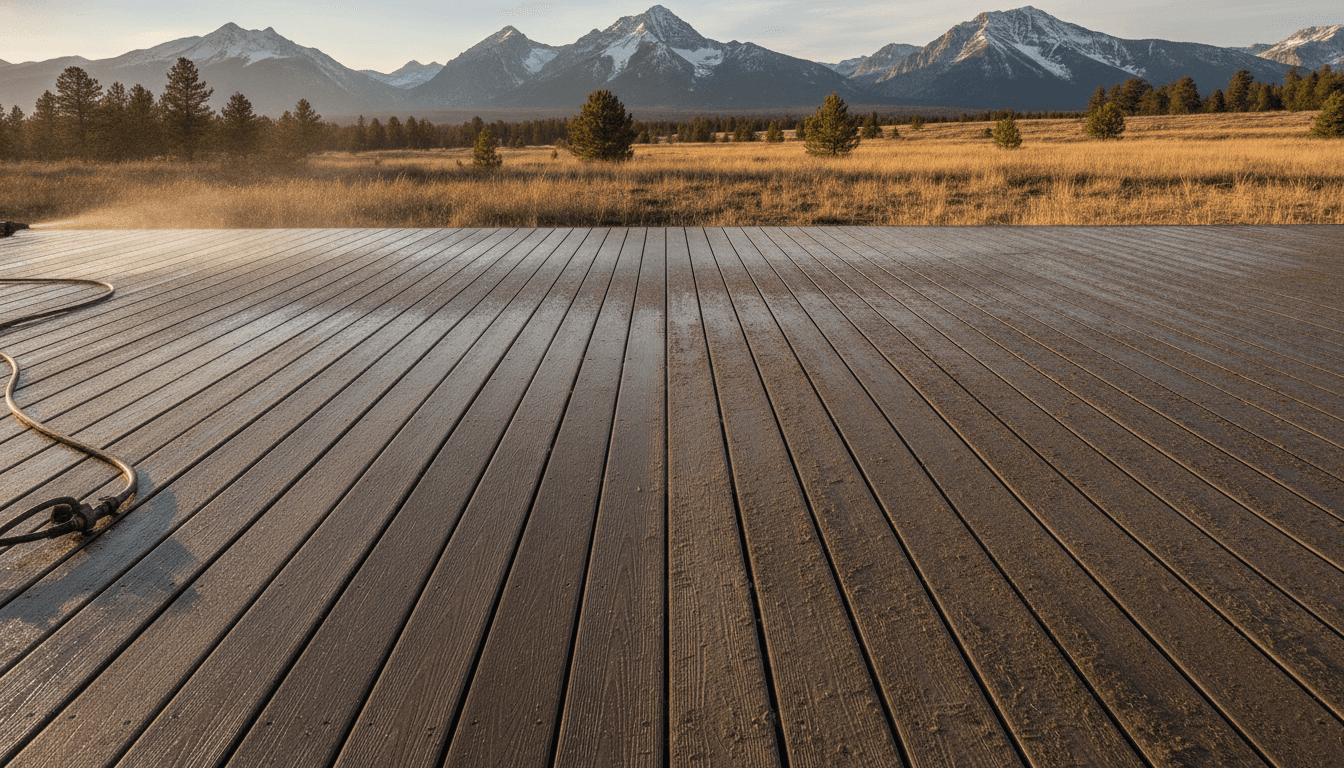
Decks and fences round out the typical residential quote. A 300 square foot wood deck cleaned at low pressure with a wood brightener runs roughly $150 to $400, while a cedar privacy fence prices out around $1.50 to $3 per linear foot. Missoula and Helena sit a little above Billings and Great Falls on labor, so expect the upper half of those ranges in the western towns.
Log and Timber Homes
Montana has more log homes per capita than almost any state, and a log home is never a pressure washing job in the normal sense. Blasting logs at 3,000 PSI raises the grain, drives water into the checks, and ruins whatever finish is on the wood. A good crew soft washes logs at low pressure with a percarbonate or a log-specific cleaner, then rinses and lets the wood dry for several days before anyone touches a sprayer of sealant.
Because the cleaning is only useful if it is followed by a new coat of finish, most Montana companies quote log work as a wash and re-seal package. A modest 1,500 square foot log cabin near Seeley Lake might be $1,500 to $2,500 for the full package. A large 4,000 square foot timber home in the Gallatin Canyon with a two-story great room wall and a log-oil finish can run $4,000 or more, and the material alone for a penetrating oil finish can top $1,000.
The wash-only portion of that package, if you can find a company willing to break it out, usually runs $500 to $1,200 for a mid-sized log home. Ask specifically whether the crew has done cedar and log-oil finishes before, since a cleaner that is fine on vinyl can strip a Sikkens or a Sashco finish in one pass.
Ranch and Rural Properties
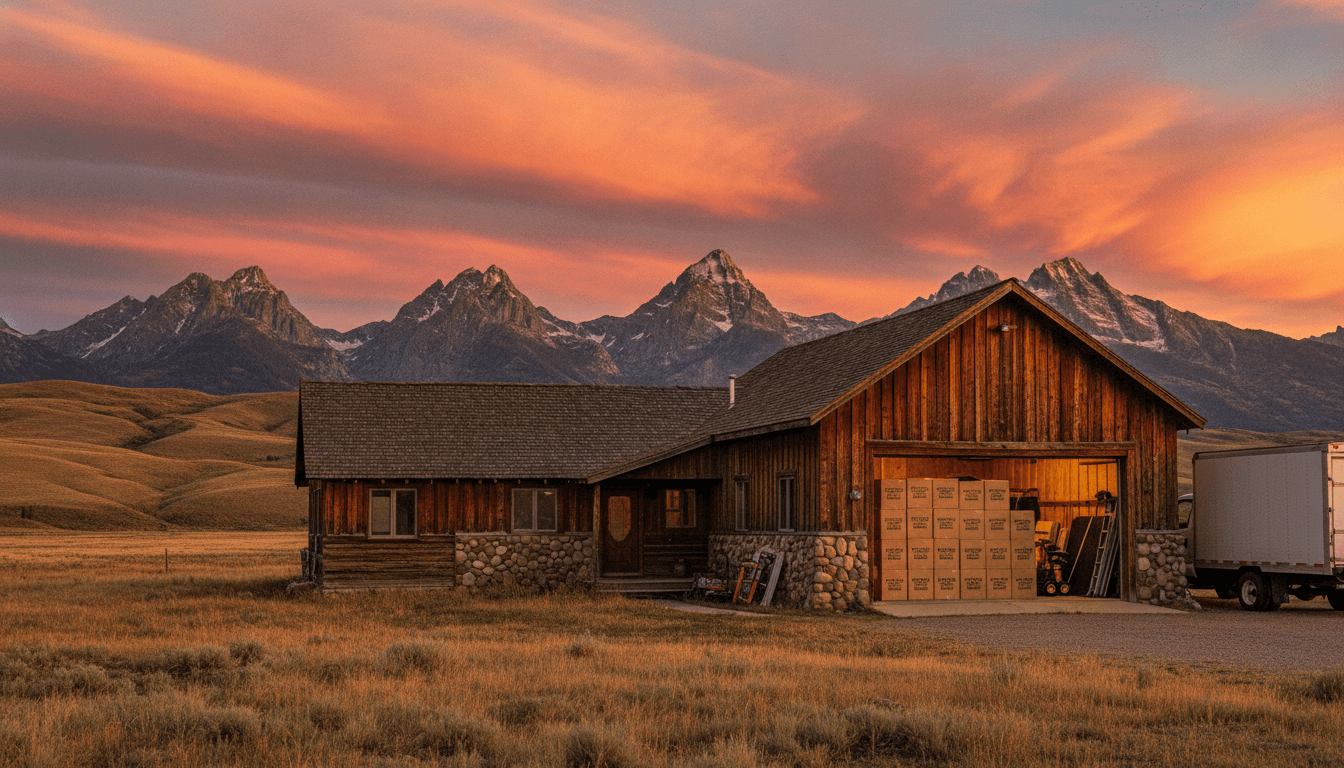
A working ranch outside Lewistown or Miles City is a different kind of job list. The house is often the smallest item on it. The bigger money goes to the shop, the barn, the hay shed, the corrals, and the equipment, and rural crews price most of that by the hour or by the square foot rather than by the surface.
Metal-sided shops and pole barns typically clean at roughly $0.15 to $0.40 per square foot of wall, so a 40 by 60 shop with 12 foot walls might be $350 to $900 for the exterior. Equipment washing is almost always hourly, with a tractor, baler, or combine cleanup running $100 to $200 per hour plus a degreaser charge. Fleet washing for a few pickups and a stock trailer usually comes out to $40 to $90 per unit if the company can do them all in one stop.
Well water is the quiet cost on rural jobs. Hard water from a ranch well leaves mineral spotting on windows and dark siding as it dries, so a careful crew either brings softened water or does a deionized rinse on glass, and either one adds $50 to $150 to the visit.
Lake and Mountain Cabins
Cabins on Flathead Lake, in Whitefish, around Big Sky, and along the Boulder River share a few cost problems that in-town homes do not have. Seasonal roads, locked gates, and steep driveways all slow a crew down, and a Kalispell company sending a truck to the east shore of Flathead Lake may add $100 or more on top of the normal trip charge for the extra hour of driving.
Snow-load debris is the other thing that separates cabin work. After a winter with six feet on the roof, the decks and lower walls are packed with pine needles, mud, and a season of grit that slid off the eaves, and a spring deck cleaning that would be $200 in Billings can be $300 to $450 once the crew has to shovel and blow off the surfaces first.
Bozeman and Whitefish rates also sit above the rest of the state. Labor and housing costs in Gallatin and Flathead counties push most services 15 to 30 percent above Billings pricing, so a $350 Billings house wash is often $425 to $475 in Bozeman or Whitefish. Big Sky is higher still, and some Bozeman companies will only book Big Sky jobs as full-day minimums in the $800 to $1,200 range.
The Montana Washing Season
The season runs from about mid-April to early October, with freeze risk on both ends. Water left in cracks in a concrete driveway can freeze on a cold April night in Great Falls and pop the surface, and most companies will not wash exterior surfaces if the overnight low is forecast below freezing.
August brings a second surge that has more to do with wildfire smoke than with dirt. Weeks of smoke leave a fine gray ash film on siding, decks, and windows across western Montana, and once the air clears in early September the phones in Missoula and Kalispell light up. Late-season pricing does not usually go up, but lead times stretch from a few days to two or three weeks.
Spring is the other bottleneck. Snowmelt mud in April and May makes gravel driveways impassable for a heavy rig, and crews will sometimes push rural jobs out until the roads firm up. If you want a rural or cabin job done before Memorial Day, you should book it in March.
What Changes the Price Beyond Travel
Water supply is the first question a rural crew asks. Many ranch and cabin jobs are on wells that cannot keep up with a 5 gallon per minute pressure washer, so the company hauls a 300 to 500 gallon tank and charges a water fee of $75 to $200 for the trip. Homes on city water in Billings or Helena skip this cost entirely.
Mineral staining and hard water are the second variable, since much of central and eastern Montana sits on hard groundwater. Removing white calcium buildup or orange iron staining from stucco or siding needs an acid-based product and extra dwell time, and it can add $100 to $300 to a job. Surface type matters too: vinyl cleans fast, stucco has to be soft washed and rinsed carefully so water does not get behind it, and wood always costs more than either because of the low-pressure technique and the brightener step.
Access is the last big lever. A two-story home with a steep 10/12 roof pitch and no flat ground for a ladder often gets quoted at $100 to $200 above a comparable single-story, and some companies bring a lift for tall gable ends, which adds a rental charge.
Hiring a Pressure Washer in Montana
Montana does not issue a state license for pressure washing, so anyone with a machine and a truck can advertise the service. The two things to ask for are a Montana business registration with the Secretary of State and a current certificate of general liability insurance. A crew soft washing a $600,000 log home should carry at least $1,000,000 in liability, and you should call the agent on the certificate to confirm it is active.
Workers' compensation coverage is the second question if the company has employees. An owner-operator can legally be exempt, but a crew of three on your roof without coverage puts you in an awkward spot if someone falls. Our Montana home maintenance price guides show what roofers, painters, and stainers charge for the follow-up work, and the better pressure washing companies in Montana will send insurance documents without being asked twice.
One technical question tells you a lot: ask whether they use a surface cleaner on concrete. A surface cleaner is the round attachment that spins two nozzles under a hood, and it is the only way to clean a driveway without leaving zebra stripes.
Frequently Asked Questions
Is it cheaper to have a Billings company drive to my ranch or hire someone local?
If a company exists within 20 miles of you, it is almost always cheaper, even if their hourly rate looks higher. A Billings crew driving 70 miles each way to Hardin will bill roughly $150 to $250 in travel before starting, which usually wipes out any savings on the base rate.
Can I pressure wash a log home myself?
You can, but you should not use pressure at all. Log cleaning is done with a garden-hose-pressure soft wash and a percarbonate cleaner, followed by a fresh coat of finish, and a mistake with a rented 3,000 PSI machine can turn a $2,000 re-seal into a $6,000 sand-and-refinish job.
How often does a Montana home need washing?
Most in-town homes do fine every two to three years, with the north side needing attention first. Cabins under conifers and homes downwind of gravel roads or feedlots often need it every year, and a smoky August can justify a rinse on its own.
Do prices go up in summer?
Base rates usually stay flat from April through October, but lead times get long. In Bozeman and Whitefish the wait for a residential slot in July often runs three to four weeks, so booking in the spring gets you the same price with far less waiting.